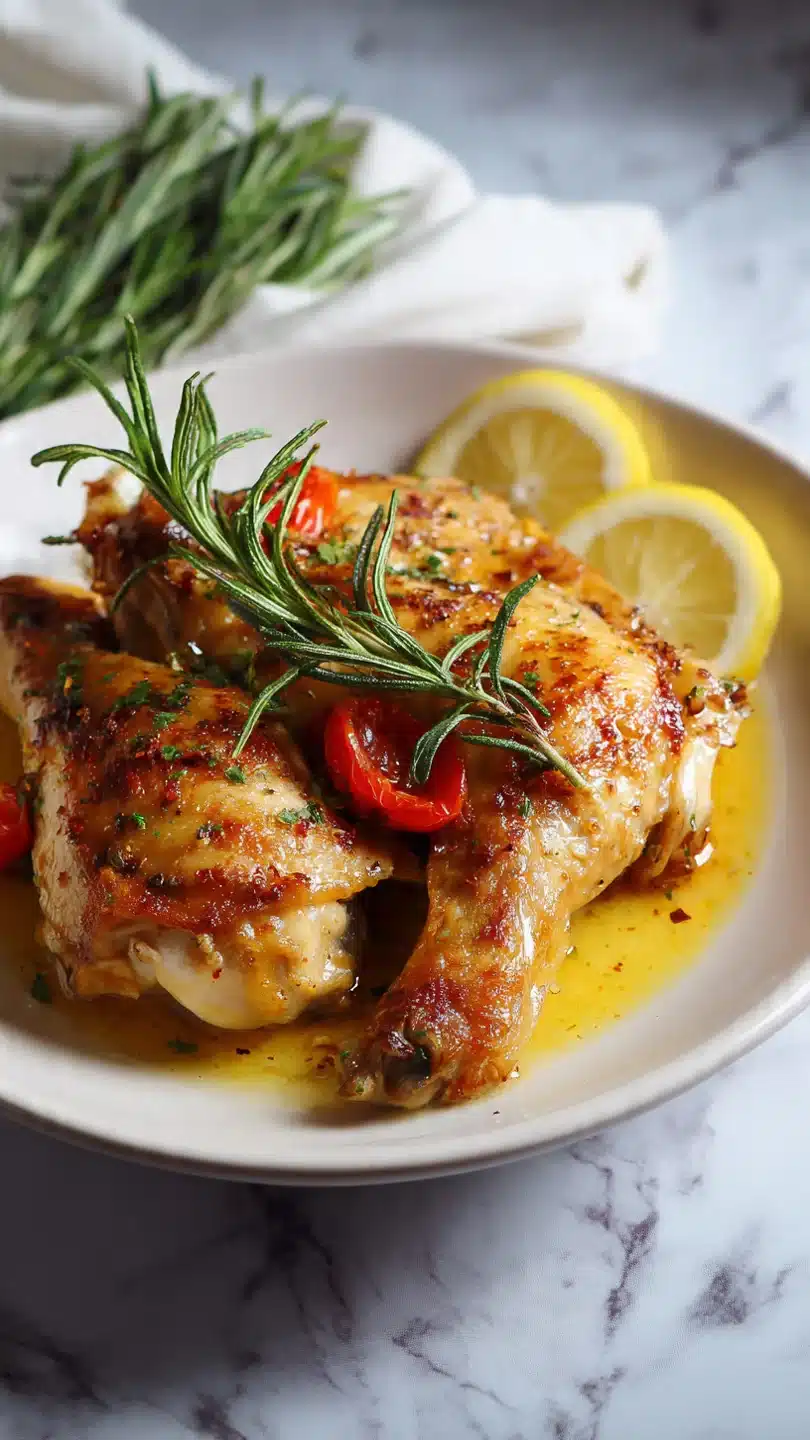
Ingredients
Equipment
Method
- Pat the chicken thighs completely dry with paper towels. In a small bowl, combine 1 teaspoon salt, 1/2 teaspoon pepper, garlic powder, and smoked paprika. Season both sides of the chicken generously. Dredge each thigh in the 1/4 cup of flour, shaking off any excess. This coating is crucial for a golden crust and will help thicken the gravy later.
- Heat the oil in a large, heavy-bottomed skillet or Dutch oven over medium-high heat. Once the oil shimmers, add the chicken, skin-side down. Cook without moving for 6-8 minutes until the skin is deeply golden and crispy. Flip and cook for another 4-5 minutes. Transfer the chicken to a plate. It won't be cooked through yet—that's intentional.
- Reduce heat to medium. Add 2 tablespoons of butter to the skillet. Once melted, add the sliced onions and a pinch of salt. Cook, stirring occasionally, for 10-12 minutes until they are soft, golden, and starting to caramelize. Add the garlic and cook for 1 minute until fragrant.
- Sprinkle the remaining 2 tablespoons of flour over the onions. Cook, stirring constantly, for 2 minutes to form a roux—it should smell nutty and look pale brown. This cooks out the raw flour taste and is the base of your gravy. Slowly pour in the chicken broth while whisking constantly to prevent lumps.
- Bring the gravy to a simmer. Stir in the heavy cream, thyme, bay leaf, remaining 1/2 teaspoon salt, and 1/2 teaspoon pepper. Nestle the seared chicken thighs back into the skillet, along with any accumulated juices. Reduce heat to low, cover, and simmer gently for 25-30 minutes, until the chicken is fall-off-the-bone tender.
- Remove the skillet from heat. Discard the bay leaf. Stir in the remaining 1 tablespoon of butter to add a final gloss to the gravy. Taste and adjust seasoning if needed. Garnish with fresh parsley. Serve immediately over mashed potatoes, rice, or with crusty bread to soak up every drop of that incredible gravy.
Notes
Chef's Tips:
• For the crispiest skin, ensure the chicken is very dry before seasoning and don't crowd the pan.
• If your gravy seems too thick after simmering, thin it with a splash of additional broth. If too thin, simmer uncovered for a few more minutes.
• This dish improves in flavor if made an hour or two ahead, allowing the gravy to fully permeate the chicken.
Food Safety:
• Chicken is safe to eat when it reaches an internal temperature of 165°F (74°C) at the thickest part.
• Store leftovers in a shallow, airtight container in the refrigerator within 2 hours of cooking.