

Chicken cacciatore
There’s a profound satisfaction that comes from a one-pot meal where simple ingredients transform into something greater than the sum of their parts. Chicken Cacciatore, which translates to “hunter’s chicken,” is exactly that kind of dish. Imagine tender, fall-off-the-bone chicken thighs simmered in a rustic, deeply flavored sauce brimming with tomatoes, mushrooms, bell peppers, and herbs.
It’s the epitome of Italian comfort food—hearty, aromatic, and incredibly forgiving. This isn’t a fussy restaurant presentation; it’s a robust, family-style meal meant to be shared straight from the pot. Having prepared this dish countless times in professional settings and home kitchens, I’ve refined the method to deliver maximum flavor with clear, reliable steps.
Let’s create a pot of magic together.
This chicken cacciatore recipe is a cornerstone of practical, flavorful cooking. Here’s what makes it a keeper:
- One-Pot Wonder: From sear to simmer, everything happens in a single Dutch oven, meaning incredible flavor and minimal cleanup.
- Deep, Complex Flavor: The technique of searing the chicken creates a fond (those delicious browned bits) that forms the foundation of a rich, savory sauce.
- Forgiving & Flexible: A braise is inherently forgiving. The long, slow cook tenderizes the chicken perfectly, and the ingredient list welcomes substitutions based on what you have.
- Meal-Prep Friendly: The flavors meld and improve overnight, making it an ideal make-ahead dish for busy weeks.
- Crowd-Pleasing Comfort: This is universally appealing, rustic food that satisfies both casual family dinners and gatherings with friends.
- Diet-Conscious: Naturally gluten-free and dairy-free, it’s easy to adapt for various dietary needs without sacrificing taste.
Ingredients You’ll Need
- Gathering these ingredients is like assembling a palette of rustic Italian flavors. Each one plays a specific role in building the dish’s signature depth. Using bone-in, skin-on chicken thighs is my non-negotiable professional tip—they remain succulent through the long braise where breasts would dry out. For the tomatoes, a good-quality can of crushed San Marzano tomatoes makes a noticeable difference with their sweet, low-acid profile. The red wine isn’t just for deglazing; it adds a layer of fruity acidity that balances the tomatoes. Don’t worry, the alcohol cooks off, leaving only its essence. If you have fresh herbs, by all means use them, but the dried oregano and thyme are workhorses here, providing a sturdy, earthy backbone that stands up to the cooking time. Let’s get everything prepped and ready to go.

Note: You’ll find the complete list of ingredients, along with their exact measurements, in the printable recipe card at the bottom of this post.
Kitchen Equipment Needed
You don’t need specialized gear for this classic dish. A large Dutch oven or heavy-bottomed pot with a tight-fitting lid is essential for even heat distribution and successful braising. You’ll also need a reliable pair of tongs for handling the chicken, a wooden spoon for stirring and scraping up the flavorful fond, and basic prep tools like a chef’s knife and cutting board.
That’s truly it. If you don’t have a Dutch oven, a deep, heavy skillet with a lid will work in a pinch.
How to Make Chicken Cacciatore Recipe
Step 1: Sear the Chicken to Perfection
Pat your chicken thighs completely dry with paper towels—this is crucial for getting a proper sear, not a steam. Season them generously on both sides. Heat the oil in your Dutch oven over medium-high heat until it shimmers.
Working in batches, place the chicken in the pot skin-side down. Resist the urge to move it! Let it cook undisturbed for 5-7 minutes until the skin is a deep, golden brown and releases easily from the pot.
Flip and sear the other side. This step isn’t just for color; it renders fat and creates the flavorful foundation for your entire sauce. Trust me, don’t rush or crowd the pan.
Step 2: Build the Flavor Base
Transfer the seared chicken to a plate. You’ll see those beautiful browned bits (the fond) left in the pot. That’s liquid gold.
To the same pot, add your diced onion and bell pepper strips. Cook them, stirring occasionally, until they soften and start to take on a little color from the residual chicken fat and fond, about 5-7 minutes. Next, add the mushrooms.
They’ll release their water first—let that cook off until they begin to brown nicely, another 5 minutes. Finally, stir in the minced garlic and cook for just one minute until fragrant. You can already smell the magic building.
Step 3: Deglaze with Wine
Now for the fun part: deglazing. Pour the red wine into the pot. As it hits the hot surface, use your wooden spoon to vigorously scrape up all the caramelized fond from the bottom.
This dissolves those concentrated flavors back into the liquid. Let the wine simmer and reduce by about half, which takes 2-3 minutes. This cooks off the raw alcohol taste, leaving behind a rounded, fruity acidity that will balance the sweetness of the tomatoes perfectly.
Step 4: Simmer and Braise
Stir in the crushed tomatoes, chicken broth, tomato paste, dried oregano, and thyme. Add the whole rosemary sprigs and bay leaves. Now, nestle the seared chicken thighs back into the pot, submerging them in the sauce.
Tip from me: tuck them in so they’re mostly covered. Bring everything to a gentle simmer, then immediately cover the pot and reduce the heat to low. The gentle, moist heat of the braise is what will transform the chicken into something incredibly tender.
Step 5: Finish and Serve
Let it braise peacefully for 45-50 minutes. You’ll know it’s done when the chicken is fork-tender and pulls easily away from the bone. If your sauce seems a bit thin, you can remove the lid for the last 10 minutes of cooking to allow some reduction.
Carefully fish out and discard the rosemary stems and bay leaves. Taste the sauce—this is your moment to adjust the seasoning with a pinch more salt or pepper. Garnish lavishly with fresh parsley for a bright finish.
Serve it family-style, straight from the pot, over a bed of creamy polenta, mashed potatoes, or wide pasta like pappardelle to catch every drop of the incredible sauce.
A few insights from the kitchen can elevate your cacciatore from good to exceptional:
- The Power of Patience: When searing the chicken, wait for it to release naturally from the pot. If you force it, you’ll tear the skin and leave the best flavor behind.
- Low and Slow is Key: Once the braise begins, keep the heat at a bare simmer. A rolling boil will make the chicken tough and can cause the sauce to spatter.
- Sauce Consistency: The sauce should be thick and coat the back of a spoon. If it’s too thin after cooking, remove the chicken and simmer the sauce uncovered for 5-10 minutes to reduce. If it’s too thick, stir in a splash of broth or water.
- Herb Strategy: Using sturdy dried herbs (oregano, thyme) in the braise and delicate fresh herbs (parsley) as a garnish ensures balanced flavor without bitterness.
- Don’t Skip the Garnish: The fresh parsley added at the end isn’t just for looks; it provides a necessary pop of freshness that cuts through the richness of the sauce.
Recipe Variations
- The beauty of a dish like cacciatore is its adaptability. Here are some tested variations to make it your own:
- White Wine Cacciatore: Substitute a dry white wine like Pinot Grigio for the red wine for a lighter, brighter sauce profile.
- Olive & Caper Twist: Stir in a handful of pitted Kalamata olives and 2 tablespoons of rinsed capers during the last 10 minutes of braising for a salty, briny kick.
- Spicy Arrabbiata Style: Add 1/2 to 1 teaspoon of red pepper flakes when you add the garlic to infuse the dish with a gentle heat.
- Creamy Finish: For a richer sauce, stir in 1/4 cup of heavy cream or a dollop of mascarpone cheese just before serving.
- Vegetable-Packed: Add other vegetables like sliced carrots with the onions or a handful of spinach stirred in at the very end.
- Slow Cooker Method: After searing the chicken and sautéing the vegetables, transfer everything to a slow cooker and cook on LOW for 6-7 hours.
What to Serve With This Recipe
Chicken cacciatore is a complete meal in a pot, but it craves the perfect vehicle for its magnificent sauce. My absolute favorite pairing is creamy polenta—its mild corn flavor and soft texture are the ideal contrast to the robust chicken and sauce. Pappardelle pasta or wide egg noodles are a close second, as their broad surfaces hold the chunky sauce beautifully.
For a lighter option, serve it over a bed of mashed cauliflower or with a side of crusty, grilled bread for dipping. To round out the meal, a simple bitter greens salad with a lemon vinaigrette provides a refreshing counterpoint. A medium-bodied red wine like a Chianti or Sangiovese is the perfect beverage companion.
Storage & Make-Ahead Instructions
- This dish stores and reheats beautifully, often tasting even better the next day.
- Refrigeration: Cool completely, then store in an airtight container in the refrigerator for up to 4 days.
- Freezing: Freeze in airtight containers or heavy-duty freezer bags for up to 3 months. Thaw overnight in the refrigerator before reheating.
- Reheating: Gently reheat in a covered pot over low heat on the stove, adding a splash of broth or water if the sauce has thickened too much. You can also reheat individual portions in the microwave.
- Make-Ahead: You can fully prepare the dish 1-2 days in advance. The flavors will continue to develop as it sits. Reheat gently before serving.
Frequently Asked Questions
Q: Can I use boneless, skinless chicken thighs?
A: You can, but you’ll sacrifice some flavor and texture. The bone adds depth to the sauce, and the skin protects the meat during braising. If using boneless, reduce the braising time to 25-30 minutes to prevent dryness.
Q: I don’t cook with alcohol. What can I use instead of red wine?
A: You can substitute with an equal amount of additional chicken broth mixed with 1 teaspoon of red wine vinegar or balsamic vinegar to mimic the acidity.
Q: How do I know when the chicken is done braising?
A: The chicken should be extremely tender. Pierce a thigh with a fork; the meat should pull away from the bone with little resistance, and an instant-read thermometer inserted into the thickest part (avoiding bone) should read 165°F (74°C).
Q: Can I make this in a slow cooker or Instant Pot?
A: Yes. For a slow cooker, follow steps 1-3 on the stove, then transfer everything to the slow cooker and cook on LOW for 6-7 hours. For an Instant Pot, use the Sauté function for steps 1-3, then add remaining ingredients and pressure cook on High for 15 minutes, with a natural pressure release.
Q: My sauce is too thin/too thick. How can I fix it?
A: Too thin: Remove the chicken and simmer the sauce uncovered until it reduces to your desired consistency. Too thick: Stir in additional chicken broth or water, a few tablespoons at a time, until it loosens up.
Q: What’s the best type of mushroom to use?
A: Cremini (baby bella) mushrooms are ideal for their meaty texture and earthy flavor. White button mushrooms work well too. For a more luxurious version, you could use a mix that includes some sliced porcini or shiitake.
Q: Is it necessary to use fresh herbs?
A: The dried oregano and thyme are essential for the braise. The fresh parsley garnish is highly recommended for a burst of freshness, but in a pinch, you can use a teaspoon of dried parsley added with the other dried herbs.
Final Thoughts
This chicken cacciatore recipe is more than just a list of ingredients and steps; it’s a lesson in building deep, satisfying flavor through simple, time-honored techniques. The sear, the sauté, the deglaze, and the gentle braise—each step has a purpose, transforming humble components into a comforting, celebratory meal. It’s the kind of dish that fills your kitchen with an irresistible aroma and gathers people around the table.
I encourage you to make it your own, play with the variations, and most importantly, enjoy the process. There’s a special kind of pride that comes from serving a beautifully braised one-pot meal. I hope this recipe becomes a trusted favorite in your home kitchen.
If you make it, I’d love to hear how it turned out! Share your results and any creative twists you tried.
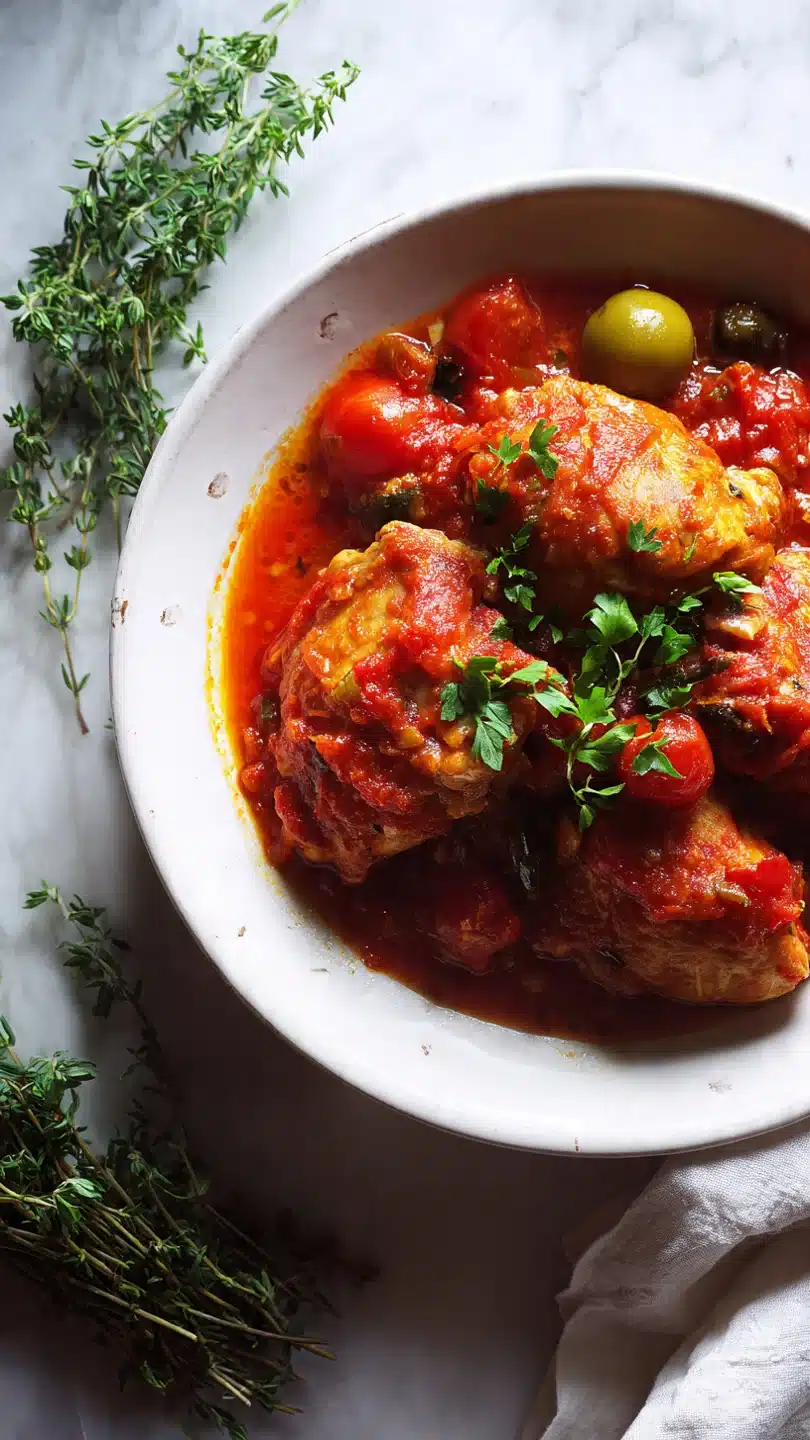
Authentic Chicken Cacciatore
Ingredients
Equipment
Method
- Season the chicken thighs generously on both sides with salt and pepper. Heat 2 tablespoons of olive oil in a large Dutch oven or heavy-bottomed pot over medium-high heat. Working in batches to avoid crowding, sear the chicken, skin-side down first, for 5-7 minutes per side until deeply golden brown. Transfer to a plate. This step is non-negotiable for building flavor.
- Reduce heat to medium. Add the remaining 1 tablespoon of oil to the pot. Add the diced onion and bell pepper. Cook, stirring occasionally, for 5-7 minutes until softened. Add the sliced mushrooms and cook for another 5 minutes until they release their moisture and begin to brown. Add the minced garlic and cook for 1 minute until fragrant.
- Pour in the red wine to deglaze the pot, scraping up all the flavorful browned bits from the bottom with a wooden spoon. Let it simmer for 2-3 minutes until reduced by half. This concentrates the flavor and cooks off the alcohol.
- Stir in the crushed tomatoes, chicken broth, tomato paste, dried oregano, and dried thyme. Add the rosemary sprigs and bay leaves. Nestle the seared chicken thighs back into the pot, submerging them in the sauce. Bring to a gentle simmer.
- Cover the pot, reduce heat to low, and let it braise for 45-50 minutes. The chicken is done when it is fork-tender and easily pulls away from the bone. In the last 10 minutes, you can remove the lid to slightly thicken the sauce if desired.
- Carefully remove and discard the rosemary stems and bay leaves. Taste the sauce and adjust seasoning with additional salt and pepper if needed. Garnish generously with chopped fresh parsley. Serve hot over your choice of polenta, mashed potatoes, or pasta to soak up every drop of the incredible sauce.


