

chicken caesar salad
There’s a reason the Caesar salad has held its place on menus for a century. When done right, it’s a perfect symphony of textures and flavors: the cold, crisp bite of romaine, the savory punch of garlic and anchovy, the rich creaminess of the dressing, the salty shards of Parmesan, and the satisfying crunch of a crouton. Adding juicy, seasoned chicken transforms it from a starter into a meal you can feel good about.
As a chef, I’ve made thousands of these, and I’m here to share the professional techniques that guarantee a flawless result every single time. This isn’t just a salad; it’s a masterclass in balancing simplicity with big, bold flavor.
This recipe demystifies the classic Caesar, giving you a restaurant-quality result with clear, actionable steps.
- Restaurant-Quality at Home: Forget overdressed, wilted versions. This recipe focuses on technique for a crisp, perfectly coated salad with a dressing that clings beautifully.
- The Perfect Homemade Dressing: Learn the simple emulsification trick for a creamy, rich dressing that won’t separate or taste overly mayonnaise-heavy. The anchovy adds that essential umami depth.
- Juicy, Flavorful Chicken Every Time: My method of pounding and proper resting ensures your chicken is never dry, making it the star of the plate.
- Customizable to Your Diet: Easily adapt this recipe—make it gluten-free, skip the anchovies, or use a vegan Parmesan. The core technique remains the same.
- Quick & Satisfying: From start to finish in under 30 minutes, this is a weeknight dinner hero that feels special enough for company.
Ingredients You’ll Need
- Let’s gather our ingredients. The magic of a Caesar salad lies in the quality and balance of a few key components. Using fresh, good-quality items here makes a world of difference.
- Romaine Hearts: Look for firm, bright green heads. The hearts are more tender and crisp than the outer leaves. Crucial step: Wash and dry them thoroughly. Any water will dilute your dressing and cause wilting.
- Chicken Breasts: Boneless, skinless breasts are our blank canvas. Pounding them to an even thickness is non-negotiable for even cooking.
- Parmesan Cheese: Please, for the love of flavor, buy a block and grate it yourself. Pre-grated cheese contains anti-caking agents that prevent it from melting smoothly into the dressing or over the salad.
- Anchovy Fillets: I know they can be divisive, but they are the secret to that deep, savory, “what is that amazing flavor?” quality. They melt into the dressing, leaving no fishy taste, just complexity. If you must skip them, add an extra 1/2 tsp of Worcestershire sauce.
- Oils: We use two types. Extra virgin olive oil provides flavor, while a neutral oil (like avocado) helps create a stable emulsion without overpowering the other ingredients.
- Egg Yolk: This is the traditional emulsifier that gives the dressing its luxurious, creamy body. For absolute safety, use a pasteurized egg. A great alternative is 2 tablespoons of high-quality mayonnaise.

Note: You’ll find the complete list of ingredients, along with their exact measurements, in the printable recipe card at the bottom of this post.
Kitchen Equipment Needed
You don’t need fancy gear, but a few key tools will set you up for success.
- A Large, Wide Salad Bowl: This gives you room to toss the salad gently without crushing the ingredients. A metal or glass bowl is ideal.
- Blender or Food Processor: Essential for getting the dressing silky smooth and perfectly emulsified. A small immersion blender and cup also works wonderfully.
- Grill Pan or Cast-Iron Skillet: For getting those beautiful sear marks and flavor on the chicken. An outdoor grill is fantastic when available.
- Instant-Read Thermometer: The only foolproof way to know your chicken is perfectly cooked (165°F) and juicy, not overdone.
- Salad Spinner: I can’t stress this enough. This is the single best tool for achieving bone-dry lettuce, which is the foundation of a crisp salad.
How to Make Chicken Caesar Salad Recipe
Step 1: Prep the Chicken for Perfection
Start by prepping your protein. Pat the chicken breasts completely dry—this helps them sear, not steam. Placing them between plastic wrap and gently pounding to an even thickness is a chef’s trick that guarantees every bite cooks at the same rate.
No more dry edges and raw centers! Season them well and let them sit at room temperature for 10 minutes. Trust me, this takes the chill off and promotes more even cooking from the moment they hit the pan.
Step 2: Build the Dressing Foundation
Now, let’s make the heart of the salad: the dressing. Combine your flavor powerhouses—anchovy, garlic, mustard, lemon, and Worcestershire—in the blender with the egg yolk. Blend this into a smooth paste first.
This ensures no chunks of garlic or anchovy remain. Tip from me: have your oils measured and ready in a liquid measuring cup with a spout for easy, controlled pouring.
Step 3: Emulsify for Creamy Consistency
Here’s the most important technique for the dressing. With the blender running on low, begin drizzling in the combined oils in a very thin, steady stream. I mean slowly—this should take a full 60-90 seconds.
You’ll see the mixture transform from a watery paste to a thick, pale, creamy emulsion. This slow incorporation is what prevents the dressing from “breaking” or separating later. Believe me, the patience pays off in texture.
Step 4: Cook and Rest the Chicken
Heat your pan until it’s properly hot. A good sear locks in juices. Add the chicken and resist the urge to move it!
Let it cook undisturbed for 5-7 minutes to develop a golden-brown crust. Flip and finish cooking. The instant-read thermometer is your best friend here; pull it at 165°F.
Then, and this is critical, let it rest on a cutting board for 5 minutes. This allows the tense muscle fibers to relax and reabsorb the juices, which otherwise would spill out onto the cutting board.
Step 5: Assemble with Care and Serve
Now for the fun part! In your large bowl, combine your bone-dry romaine, most of the Parmesan, and the croutons. Slice the rested chicken against the grain.
Add about three-quarters of the dressing and toss gently but thoroughly until every leaf glistens. Top with the sliced chicken, a final drizzle of dressing, and a generous shower of the remaining Parmesan. Step back and admire your beautiful, crisp, professional-looking creation before serving immediately.
A few insights from my years in restaurant kitchens can elevate your salad from good to unforgettable.
- The Dry Lettuce Mandate: Water is the enemy of a good Caesar. After washing, spin your romaine, then lay it out on a clean kitchen towel and pat it completely dry. This step is non-negotiable for maximum crispness.
- Emulsification Patience: If your dressing breaks or looks thin, you likely added the oil too fast. Don’t panic. Pour the broken dressing into a clean cup. Add a fresh egg yolk or a teaspoon of Dijon mustard to your blender, then slowly re-blend the broken dressing into it. It should come right back together.
- Crouton Strategy: To keep croutons crunchy, add them just before tossing. If you’re making your own, use day-old bread, toss with olive oil, garlic powder, and salt, and bake at 375°F until golden and crisp.
- Garlic Control: For a mellower garlic flavor in the dressing, you can quickly roast the peeled garlic clove in a dry skillet for a few minutes until lightly browned, or use a microplane to grate it finely instead of blending it whole.
Recipe Variations
- This classic framework is wonderfully adaptable. Here are some of my favorite tested twists.
- Grilled Romaine Caesar: For a smoky twist, cut a romaine heart in half lengthwise, brush with oil, and grill for 1-2 minutes per side until lightly charred. Top with the dressing, chicken, and toppings.
- Keto/Low-Carb Version: Simply omit the croutons. You can add extra crunch with chopped, toasted pecans or walnuts, or even some crispy bacon bits.
- Salmon Caesar: Replace the chicken with a pan-seared or grilled salmon fillet. The rich, fatty salmon pairs beautifully with the bright, creamy dressing.
- Vegan Caesar: Use chickpeas or baked tofu instead of chicken. For the dressing, substitute the egg yolk with 2 tbsp vegan mayonnaise and the Parmesan with 2 tbsp nutritional yeast.
- Spicy Caesar: Add 1/2 tsp of red pepper flakes or a few dashes of hot sauce to the dressing blend. Garnish with freshly cracked black pepper.
- “Everything Bagel” Caesar: Sprinkle the finished salad with an “everything bagel” seasoning blend for an extra hit of garlic, onion, and sesame flavor.
What to Serve With This Recipe
While this salad is a complete meal on its own, it pairs beautifully with other dishes for a larger spread.
For a light lunch or dinner, it needs no accompaniment. If you’re serving it as part of a multi-course meal, it makes a fantastic starter before a simple pasta dish like Aglio e Olio or a hearty soup like Tuscan White Bean. For a summer barbecue, it’s the perfect fresh side to balance out grilled steaks, burgers, or sausages.
Beverage-wise, a crisp Sauvignon Blanc or a Pinot Grigio complements the salad’s acidity beautifully. For a non-alcoholic option, sparkling water with a squeeze of lemon or a classic iced tea works wonderfully.
Storage & Make-Ahead Instructions
- Caesar salad is best enjoyed immediately, but with smart prep, you can get a head start.
- Store Components Separately: Keep the undressed lettuce, cooked chicken, dressing, and croutons in separate airtight containers in the refrigerator. The dressing will keep for up to 5 days, chicken for 3-4 days, and homemade croutons for 1 week at room temperature.
- Avoid Freezing: I do not recommend freezing any component of this salad. The lettuce will turn to mush, the dressing may separate, and the chicken can become tough.
- Assemble to Order: For meal prep, portion the dry lettuce, sliced chicken, and cheese into containers. Pack dressing and croutons in small separate containers. Assemble and toss just before eating.
- Reviving Leftovers: If you have leftover dressed salad, it will be wilted. Repurpose it! Chop it finely and stuff it into a pita or wrap for a next-day lunch.
Frequently Asked Questions
Q: Can I make the dressing without raw egg?
Absolutely. The best substitute is 2 tablespoons of high-quality, full-fat mayonnaise. It will give you a similar creamy texture and rich flavor without the concern of raw eggs.
The emulsification process is already done for you, so simply blend all ingredients except the oil, then slowly blend in the oil to your desired consistency.
Q: My dressing is too thick/too thin. How can I fix it?
If it’s too thick, thin it out by blending in a teaspoon of warm water or extra lemon juice at a time until it reaches a pourable consistency. If it’s too thin, it likely broke. See the “Emulsification Patience” tip in the Professional Tips section to bring it back together.
Q: What’s the best substitute for anchovies?
For a similar umami punch, use 1 teaspoon of Worcestershire sauce (check for anchovies if you’re avoiding fish) or 1/2 teaspoon of white miso paste. You can also omit them entirely, but the dressing will lack that classic, deep savory note.
Q: Can I use bagged, pre-chopped romaine?
You can for convenience, but I find the quality and crispness is often inferior to fresh romaine hearts. If you do use it, be extra vigilant about drying it, as bagged lettuce often has excess moisture.
Q: How do I know when the chicken is done without a thermometer?
While a thermometer is best, you can press the chicken with your finger. Properly cooked chicken will feel firm but still have a slight give, similar to the fleshy part of your palm below your thumb. The juices should run clear, not pink, when pierced.
Q: Can I use chicken thighs instead of breasts?
Yes, boneless, skinless thighs are a great, flavorful option. They are more forgiving and harder to overcook. Cook them to an internal temperature of 175°F for the most tender result.
Q: How can I make this gluten-free?
Ensure your Worcestershire sauce is gluten-free (Lea & Perrins makes one), and use gluten-free croutons or make your own from a gluten-free bread.
Final Thoughts
Mastering the Chicken Caesar Salad is a rite of passage for any home cook. It teaches foundational skills like emulsification, protein cookery, and the importance of texture balance. This recipe provides all the professional insights you need to execute it with confidence, turning simple ingredients into a truly spectacular meal.
The crisp lettuce, the savory, creamy dressing, and the juicy chicken come together in a way that is always satisfying. I encourage you to try the homemade dressing at least once—it’s a game-changer. Once you see how easy it is to achieve that perfect, restaurant-style result, you may never order it out again.
Give this recipe a try, and don’t forget to come back and rate it. I’d love to hear how it turned out for you!
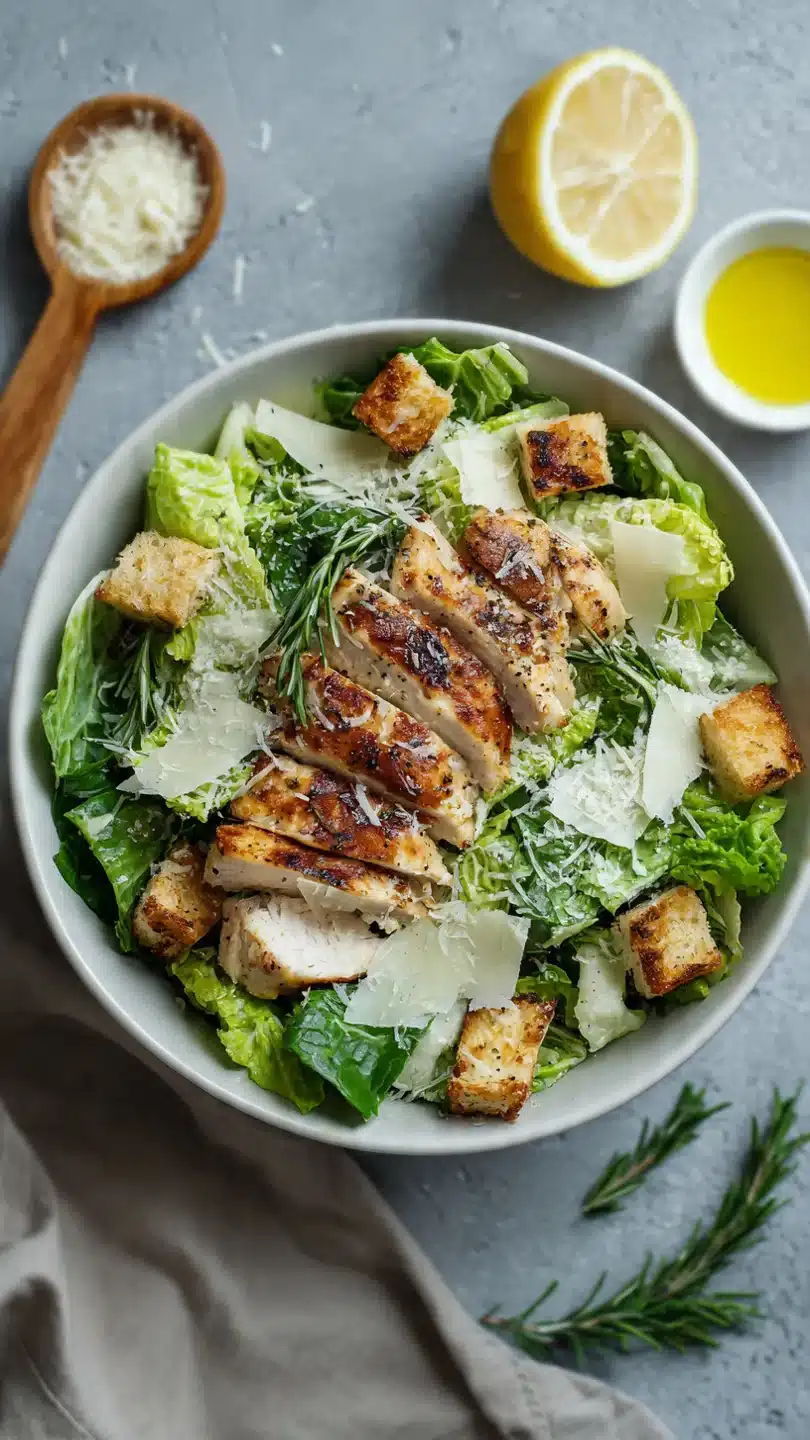
Classic Chicken Caesar Salad
Ingredients
Equipment
Method
- Prepare the chicken. Pat the chicken breasts completely dry with paper towels. Place them between two sheets of plastic wrap and gently pound to an even 3/4-inch thickness using a meat mallet or rolling pin. This ensures even cooking. Rub with 1 tbsp olive oil, then season generously on both sides with garlic powder, oregano, salt, and pepper. Let sit at room temperature for 10 minutes while you prep other components.
- Make the Caesar dressing. In a blender or food processor, combine the anchovy fillets (if using), garlic clove, Dijon mustard, lemon juice, Worcestershire sauce, and egg yolk. Blend on high until a smooth paste forms, about 30 seconds. With the machine running on low, very slowly drizzle in the extra virgin olive oil and neutral oil in a thin, steady stream. This slow emulsification is key for a thick, creamy dressing. Blend until fully combined and emulsified. Stir in 1/4 cup of the grated Parmesan cheese. Taste and season with salt and pepper. Set aside.
- Cook the chicken. Heat a grill pan, cast-iron skillet, or outdoor grill to medium-high heat. Add a light drizzle of oil. Cook the chicken for 5-7 minutes per side, without moving, until deeply golden and the internal temperature reaches 165°F. Transfer to a cutting board, tent loosely with foil, and let rest for 5 minutes. This allows the juices to redistribute, keeping the chicken incredibly juicy.
- Assemble the salad base. While the chicken rests, chop the dried romaine hearts into bite-sized pieces and place them in a large, wide salad bowl. Add the croutons and the remaining 1/4 cup of grated Parmesan. Slice the rested chicken against the grain into 1/2-inch strips.
- Dress and serve. Pour about 3/4 of the dressing over the romaine, croutons, and cheese. Using salad tongs or two large spoons, toss gently but thoroughly until every leaf is lightly coated. Add the sliced chicken on top. Drizzle with a little more dressing if desired. Finish with an extra shower of Parmesan cheese and a crack of black pepper. Serve immediately.


