

Chicken ramen noodle recipes
There’s something deeply comforting about a bowl of ramen. It’s more than just soup; it’s a warm, savory embrace in a bowl, with silky noodles, rich broth, and toppings that make every bite interesting. While authentic tonkotsu takes days, my professional kitchen experience taught me how to build incredible depth of flavor in minutes.
This chicken ramen recipe is my weeknight hero—it delivers that restaurant-quality satisfaction using smart shortcuts and core techniques you can master tonight. You’ll get a beautifully balanced, umami-rich broth, perfectly textured noodles, and tender chicken, all ready in about half an hour. Let’s make a bowl that will have you forgetting about the takeout menu.
This recipe is designed for real life—delicious, fast, and forgiving. Here’s what makes it a keeper:
- 30-Minute Miracle: From start to slurp in half an hour, thanks to a flavorful broth built with pantry staples and the strategic use of pre-cooked chicken.
- Restaurant-Quality Broth: The technique of blooming garlic and ginger in oil before adding liquid creates a profound flavor base that simulates long cooking times.
- Endlessly Customizable: This is your perfect template. I’ll show you how to swap proteins, adjust the seasoning, and pile on your favorite toppings to make it uniquely yours.
- Better Than Instant: You control the sodium, quality of ingredients, and freshness, resulting in a cleaner, more vibrant flavor than any packet could provide.
- Comfort in a Bowl: It’s the ultimate feel-good food, perfect for chilly evenings, when you’re under the weather, or anytime you need a nourishing, satisfying meal.
- Minimal Cleanup: With just two pots and a few bowls, you’re left with a stunning dinner and a kitchen that’s easy to tidy.
Ingredients You’ll Need
- Let’s gather our ingredients. This list is a mix of easy-to-find pantry heroes and a few fresh aromatics that make all the difference. I’ve included notes on quality and swaps, because a great recipe should work with what you have.
- Chicken Broth: This is the soul of your soup. I strongly recommend a good-quality, low-sodium boxed broth. You’re adding soy sauce for saltiness, so starting with a low-sodium base gives you complete control over the final seasoning.
- Soy Sauce & Mirin: This dynamic duo provides the essential salty-sweet umami backbone. If you don’t have mirin (a sweet Japanese rice wine), a teaspoon of sugar works in a pinch. For a gluten-free version, use tamari instead of soy sauce.
- Fresh Ginger & Garlic: Non-negotiable for authentic aroma and bite. Please use fresh—the jarred versions simply don’t provide the same bright, pungent kick. A fine grater or microplane is perfect for the ginger.
- Ramen Noodles: Look for dried ramen bricks in the international aisle, often sold in packs of five. We will discard the included seasoning packets. If you find fresh or refrigerated ramen noodles, even better—just adjust the cooking time.
- Cooked Chicken: This is our major time-saver. A store-bought rotisserie chicken is ideal, but leftover grilled or baked chicken works perfectly. You need about one cup, shredded or chopped.
- Toppings (Eggs, Green Onions, Nori): The soft-boiled egg is a ramen hallmark, with its jammy yolk enriching the broth. Sliced green onions add fresh crunch, and a piece of nori (dried seaweed) lends a subtle, authentic taste of the sea. All are optional but highly recommended for the full experience.

Note: You’ll find the complete list of ingredients, along with their exact measurements, in the printable recipe card at the bottom of this post.
Kitchen Equipment Needed
You don’t need specialized equipment for this recipe. A couple of standard pots and basic tools are all it takes.
- Two Saucepans: One medium (about 3-quart) for the broth and one small for boiling eggs. If you only have one pot, boil the eggs first, then use the same pot for the broth.
- Fine Grater or Microplane: Essential for turning the ginger into a fragrant paste that infuses the broth seamlessly.
- Slotted Spoon or Spider Strainer: The easiest tool for lifting the cooked noodles directly from their boiling water and into your bowls.
- Deep Bowls for Serving: Ramen is best enjoyed from a wide, deep bowl that allows you to mix and slurp comfortably.
How to Make Chicken Ramen Recipe
Step 1: Build the Flavor Foundation
In your medium pot, heat the oil over medium heat. Add the minced garlic and grated ginger. Now, here’s the pro tip: cook them for just 30 to 60 seconds, stirring constantly.
You want them to become incredibly fragrant but not take on any color. This process, called “blooming,” releases their essential oils into the fat, creating a flavor base that will permeate the entire broth. Trust me, this one minute is the most important for depth of flavor.
Step 2: Simmer the Savory Broth
Carefully pour in the chicken broth, soy sauce, and mirin. Bring the mixture to a gentle simmer, then immediately reduce the heat to low. Let it simmer uncovered for a full 10 minutes.
Don’t be tempted to cover it—allowing some steam to escape concentrates the flavors, making the broth taste like it simmered for hours, not minutes. This is where the simple ingredients transform into something complex and deeply satisfying.
Step 3: Prepare the Perfect Toppings
While the broth works its magic, multitask by preparing your toppings. For the eggs, place them in a small saucepan, cover with an inch of water, and bring to a boil. Once boiling, cover the pot, remove it from the heat, and let it sit for exactly 6-7 minutes.
Immediately transfer them to a bowl of ice water to stop the cooking. This method gives you a consistently jammy, set yolk. Peel and halve them once cool.
Shred your chicken and thinly slice the green onions.
Step 4: Cook the Noodles Separately
Bring a separate pot of water to a rolling boil for the noodles. Cook the dried ramen noodles according to the package directions, which is typically 3-4 minutes. Believe me, cooking them in a separate pot is non-negotiable.
If you cook them directly in the broth, they’ll absorb too much liquid, swell unevenly, and turn your beautiful soup into a starchy, thick porridge. Drain them immediately once they’re just tender.
Step 5: Assemble and Serve Your Masterpiece
Taste your simmered broth and adjust the seasoning with a touch more soy sauce if needed. Stir in the teaspoon of sesame oil for a final aromatic flourish. Now for the fun part: assembly.
Divide the cooked noodles between two deep bowls. Ladle the hot broth over them. Artfully arrange the shredded chicken, halved soft-boiled egg, a pile of green onions, and a piece of nori on top.
Drizzle with a little extra sesame oil. Step back and admire your beautiful creation, then serve immediately while everything is hot and vibrant.
A few insights from my years in professional kitchens will ensure your ramen is perfect every single time.
- Broth Concentration is Key: Simmering the broth uncovered is the secret to a rich, restaurant-style flavor. The gentle evaporation concentrates the savory notes, so don’t rush this step or be tempted to put a lid on it.
- Noodle Texture Management: Always cook noodles in a separate pot of well-salted boiling water. They release starch as they cook, which would cloud and thicken your broth prematurely. For the best texture, they should be just shy of al dente when you drain them, as they’ll continue to soften slightly in the hot broth.
- The Egg Timing: For a perfect jammy yolk, the 6-7 minute steep after boiling is foolproof. The ice bath is crucial—it stops the cooking instantly and makes peeling much easier. A runny yolk adds a luxurious, sauce-like quality to the broth.
- Layering Toppings: When assembling, place heavier items like chicken and the egg half first, then sprinkle lighter items like green onions on top. This creates visual appeal and ensures each topping stays distinct.
Recipe Variations & Customizations
- This recipe is a fantastic canvas. Here are some of my favorite tested variations to make it your own.
- Spicy Miso Ramen: Stir 1-2 tablespoons of red or white miso paste and 1-2 teaspoons of chili garlic sauce or gochujang into the finished broth until dissolved. Top with a dollop of chili oil.
- Vegetarian Twist: Use a robust vegetable broth and swap the chicken for pan-seared mushrooms (shiitake or oyster are great) and cubes of firm tofu. Add a splash of rice vinegar at the end for brightness.
- Citrus & Shrimp: Use a seafood or dashi broth base. Add peeled raw shrimp to the simmering broth for the last 2-3 minutes until pink and cooked. Finish each bowl with a squeeze of fresh lime juice.
- Creamy Coconut Curry: After blooming the aromatics, stir in 1 tablespoon of curry powder. Use 3 cups of chicken broth and 1 cup of full-fat coconut milk. Omit the mirin. The result is a fragrant, creamy, and deeply comforting bowl.
- Extra Veggie Power: Add a handful of baby spinach or thinly sliced bok choy to the broth in the last minute of simmering. You can also include quick-cooking vegetables like bean sprouts or corn kernels as a fresh topping.
What to Serve With This Recipe
Chicken ramen is a complete, satisfying meal in a bowl, but it pairs wonderfully with lighter, crisp sides to balance its richness.
For a simple, refreshing contrast, a small side salad with a ginger-sesame dressing works beautifully. If you’re serving a crowd, Japanese-inspired appetizers like vegetable gyoza (potstickers) or edamame sprinkled with sea salt make the meal feel special. Beverage-wise, a cold, crisp lager or a dry sake complements the savory flavors.
For a non-alcoholic option, iced green tea or sparkling water with a slice of lemon is perfect. This dish is ideal for a cozy weeknight dinner, a quick lunch, or a casual weekend feast where everyone can customize their own bowl.
Storage & Make-Ahead Instructions
- Proper storage is key to enjoying leftovers, as the noodles can quickly become soggy.
- Best Practice – Store Components Separately: For the highest quality leftovers, store the broth, noodles, and toppings in separate airtight containers in the refrigerator for up to 3 days.
- Reheating: Reheat the broth gently in a saucepan. Refresh the noodles by placing them in a colander and pouring very hot water over them for 10-15 seconds to loosen them up, or briefly microwave them with a splash of water. Reassemble your bowl.
- Freezing: You can freeze the broth (without noodles) for up to 2 months. Thaw overnight in the refrigerator and reheat. I do not recommend freezing the cooked noodles, as they will become mushy and lose their texture.
- Make-Ahead Strategy: The broth can be made 1-2 days ahead and refrigerated; its flavor often improves. Prepare your toppings (shred chicken, slice onions) and store them separately. Cook the noodles fresh when you’re ready to serve for the best texture.
Frequently Asked Questions
Q: Can I use the seasoning packet that comes with the ramen noodles?
A: I don’t recommend it. Those packets are typically very high in sodium and MSG, and contain powdered flavors that will overpower the fresh, balanced broth we’re building from scratch. You’ll get a much cleaner, more complex flavor by following the recipe.
Q: My broth tastes a bit flat. How can I fix it?
A: This is common! First, ensure you simmered it uncovered for the full time to concentrate it. To fix it, add a splash more soy sauce for saltiness/umami, a tiny pinch of sugar to balance, or a few drops of rice vinegar for brightness.
Taste after each small addition.
Q: Can I use uncooked chicken instead of pre-cooked?
A: Absolutely. Slice one small chicken breast thinly. After simmering the broth for 5 minutes, add the raw chicken slices and simmer for an additional 5-7 minutes, or until cooked through.
This poaches the chicken gently, keeping it tender.
Q: What are the best gluten-free noodle options?
A: Look for 100% buckwheat soba noodles (check the label, as some contain wheat) or dedicated gluten-free ramen or rice noodles. Remember to also use tamari instead of soy sauce.
Q: How do I prevent the soft-boiled egg from breaking when I cut it?
A: Use a very sharp knife and wipe it clean with a damp cloth between cuts. Cutting quickly and cleanly through the center usually yields the best result. Older eggs are also easier to peel than very fresh ones.
Q: Can I make this vegetarian or vegan?
A: Yes, and it’s delicious! Use a rich vegetable broth and omit the chicken. For protein, add pan-seared tofu, tempeh, or a variety of mushrooms.
For a vegan version, also omit the egg or use a marinated tofu “egg” alternative.
Q: Why is my broth cloudy?
A: Cloudiness usually occurs if the noodles were cooked directly in the broth, releasing starch. For a clear broth, always cook noodles separately. A little cloudiness doesn’t affect flavor, only appearance.
Final Thoughts
This easy chicken ramen recipe proves that you don’t need to be a professional chef or spend all day in the kitchen to create a truly soul-satisfying meal. By focusing on a few key techniques—blooming aromatics, simmering to concentrate flavor, and cooking components separately for perfect texture—you can achieve a bowl that rivals your favorite restaurant. It’s flexible, fast, and deeply rewarding to make.
I hope this recipe becomes a trusted staple in your home kitchen, a dish you can tweak and make your own for years to come. Give it a try this week, and don’t forget to play with the toppings! I’d love to hear how it turned out for you.
Share your creations online and tag me, or leave a comment below with your favorite variation. Happy cooking, and enjoy that first delicious slurp
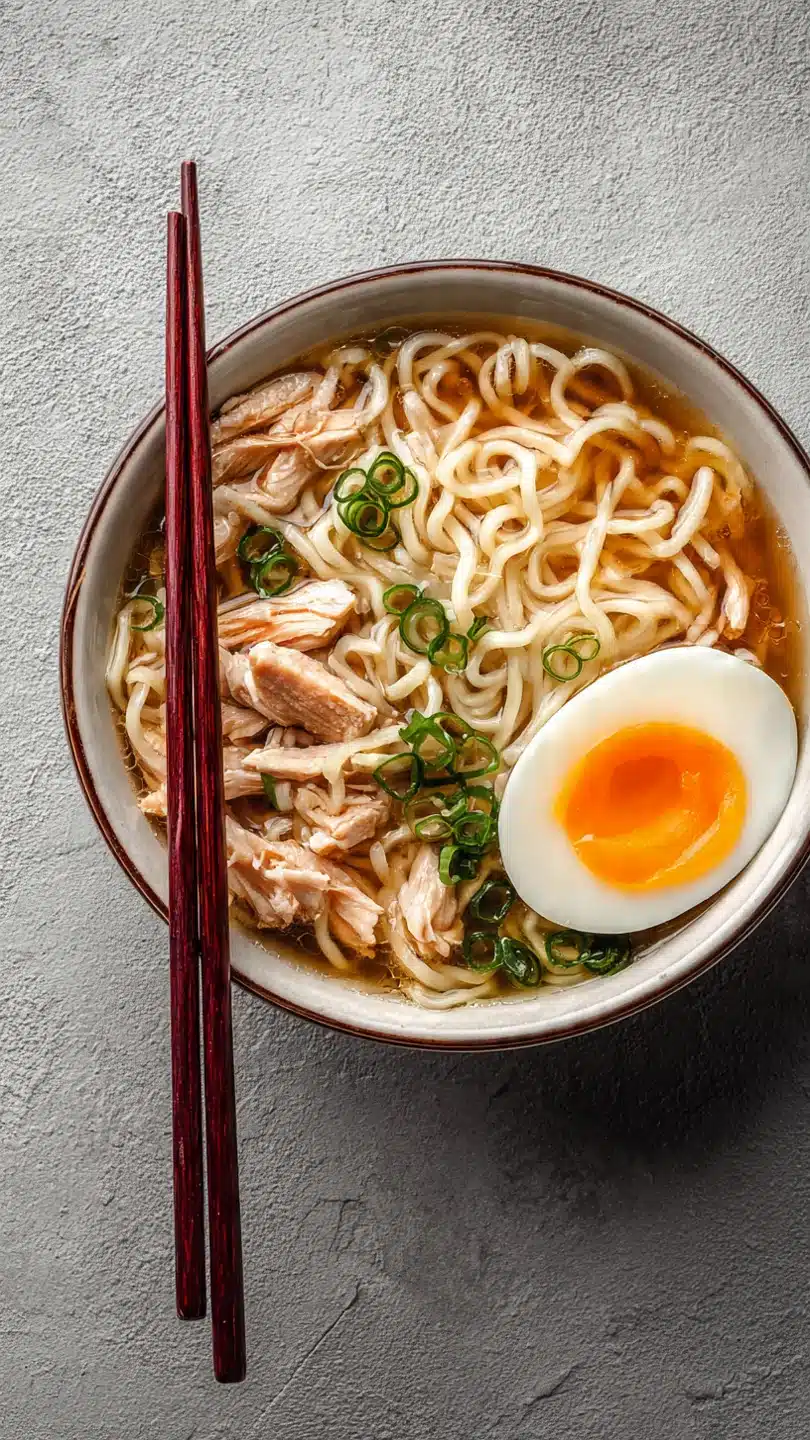
Easy 30-Minute Chicken Ramen
Ingredients
Equipment
Method
- In a medium pot, heat the neutral oil over medium heat. Add the minced garlic and grated ginger. Cook for just 30-60 seconds until fragrant, stirring constantly to prevent burning. This quick bloom releases their essential oils, which is the flavor foundation of your broth.
- Pour in the chicken broth, soy sauce, and mirin. Bring the mixture to a gentle simmer, then reduce the heat to low. Let it simmer uncovered for 10 minutes to allow the flavors to meld. This is where the magic happens—the broth transforms from simple to complex and savory.
- While the broth simmers, prepare your toppings. Soft-boil the eggs by placing them in a small saucepan, covering with water, and bringing to a boil. Once boiling, cover, remove from heat, and let sit for 6-7 minutes. Immediately transfer to an ice bath. Peel and halve when cool. Shred your chicken and slice the green onions.
- Bring a separate pot of water to a boil for the noodles. Cook the dried ramen noodles according to package directions, usually 3-4 minutes. Drain immediately. Tip from me: Never cook the noodles directly in the broth, as they will soak up too much liquid and become mushy.
- Taste the simmered broth and adjust seasoning if needed. Stir in the teaspoon of sesame oil for a final aromatic punch. Divide the cooked noodles between two deep bowls. Ladle the hot broth over the noodles, then artfully arrange the shredded chicken, halved soft-boiled egg, green onions, and nori. Drizzle with a little extra sesame oil and serve immediately.


