

chicken lo mein recipe
There’s something deeply satisfying about twirling up a forkful of glossy noodles, tender chicken, and crisp vegetables, all coated in a savory, umami-rich sauce. As a chef, I love the challenge of recreating takeout favorites at home, where I can control the quality of ingredients and dial the flavor up to eleven. This chicken lo mein recipe is my weeknight hero—it delivers that classic restaurant taste and texture, but comes together in one pan in about the same time it would take for delivery to arrive.
The secret isn’t a mysterious ingredient; it’s a simple, tested method that guarantees perfect results every single time.
- One-pan convenience: Everything cooks in a single wok or large skillet, meaning less cleanup and more flavor layered into the dish.
- Big flavor, fast: The combination of soy, oyster, and hoisin sauces creates a complex, restaurant-quality sauce in minutes, no tedious reduction needed.
- Texture perfection: By marinating the chicken with cornstarch and cooking components separately, you ensure tender meat, crisp-tender veggies, and perfectly chewy noodles.
- Endlessly customizable: This is a fantastic template. Don’t like bell peppers? Use broccoli. Want it spicy? Add chili crisp. It’s your kitchen, your rules.
- Kid-friendly and crowd-pleasing: The familiar, comforting flavors make this a hit with both picky eaters and adults looking for a satisfying meal.
- Diet-flexible: Easily adaptable to be gluten-free or to include more vegetables, making it a versatile staple for any eating style.
Ingredients You’ll Need
Let’s gather our ingredients—this is where the magic starts. You’ll be surprised how simple pantry staples can transform into something that tastes like it came from your favorite Chinese restaurant. The key is balance: savory soy sauce, sweet hoisin, and rich oyster sauce come together to form the backbone of the flavor.
- Chicken: I recommend boneless, skinless chicken thighs for their inherent juiciness and flavor, but breasts work perfectly if sliced thinly against the grain.
- Sauces: Low-sodium soy sauce allows you to control the salt level. Oyster sauce adds a deep, savory umami, and hoisin brings a touch of sweetness and thickness. These three are the holy trinity for this sauce.
- Aromatics: Fresh garlic and ginger are non-negotiable for authentic fragrance. Mince them finely so they disperse their flavor throughout the dish.
- Vegetables: I use a classic combo of carrots, bell peppers, and cabbage for color, crunch, and sweetness. Shredded bok choy or snap peas are fantastic additions.
- Noodles: True lo mein noodles have a wonderful chew, but dried spaghetti is a brilliant and accessible substitute that works beautifully.
- Cornstarch: This is our secret weapon for the chicken. A small amount in the marinade creates a velvety coating that seals in moisture during the high-heat stir-fry.

Note: You’ll find the complete list of ingredients, along with their exact measurements, in the printable recipe card at the bottom of this post.
Kitchen Equipment Needed
You don’t need specialized equipment to make great lo mein at home. A large, heavy-bottomed skillet or a wok is ideal because it provides plenty of surface area for quick, high-heat cooking. You’ll also need a large pot for boiling the noodles, a good chef’s knife for prepping, and a pair of tongs—they’re indispensable for tossing the noodles with the sauce.
Having everything measured and prepped before you start cooking (your mise en place) is the single most important tip for a smooth, stress-free stir-fry.
How to Make Chicken Lo Mein Recipe
Step 1: Marinate the Chicken
In a medium bowl, combine your thinly sliced chicken with the soy sauce, Shaoxing wine, and cornstarch. Use your hands to toss and massage the marinade into every piece. Let it sit for at least 10 minutes.
Believe me, this short marination does wonders. The cornstarch slurry coats the protein, a technique called “velveting,” which prevents the chicken from seizing up and becoming tough during the intense heat of the wok, guaranteeing succulent bites every time.
Step 2: Cook the Noodles
While the chicken marinates, bring a large pot of salted water to a boil and cook your noodles according to the package directions, aiming for al dente. Drain them and give them a quick rinse under cool water to wash off excess starch and stop the cooking process. Toss them with just a drizzle of oil to prevent sticking.
Trust me, slightly undercooked noodles are perfect here because they’ll have a chance to finish cooking and soak up the glorious sauce in the final toss.
Step 3: Sear the Chicken
Heat one tablespoon of oil in your wok or large skillet over high heat until it shimmers. Add the marinated chicken in a single layer and let it cook undisturbed for 2-3 minutes to develop a beautiful sear. Then, stir-fry for another 2-3 minutes until it’s just cooked through.
Remove it to a clean plate. This step of cooking the chicken separately is crucial—it ensures we get flavorful browning instead of steaming the meat in a crowded pan.
Step 4: Stir-Fry the Aromatics and Veggies
Add the remaining oil to the same pan. Toss in the minced garlic and ginger and stir-fry for just 30 seconds until incredibly fragrant. Tip from me: Have your prepped vegetables ready to go right next to the stove.
Immediately add the carrots, bell peppers, and cabbage. Stir-fry them for 3-4 minutes, keeping them moving. You want them to be vibrant and crisp-tender, not soft and soggy—they’ll add a wonderful textural contrast to the soft noodles.
Step 5: Combine Everything and Toss with Sauce
Now comes the fun part! Return the cooked chicken and the par-cooked noodles to the wok with the vegetables. Pour the pre-mixed sauce (soy, oyster, hoisin, sesame oil, and broth) over everything.
Using your tongs, lift, toss, and stir everything together for 2-3 minutes. You’ll see the sauce thicken slightly and cling to every noodle and piece of chicken, creating that signature glossy coating. This is where the dish truly comes together.
Step 6: Garnish and Serve Immediately
Remove the pan from the heat and garnish generously with sliced green onions. Serve it right away in bowls while it’s piping hot. Step back and admire your work—the glossy sheen, the colorful vegetables, and the incredible aroma filling your kitchen.
This dish is best enjoyed immediately, straight from the wok, when the textures are at their absolute peak.
- The Power of Mise en Place: Have every ingredient measured, chopped, and within arm’s reach before you turn on the stove. Stir-frying happens fast, and there’s no time to search for that bottle of soy sauce.
- High Heat is Key: Your wok or skillet needs to be very hot to properly sear the chicken and quickly cook the vegetables without leaching all their moisture. Don’t be afraid of the sizzle.
- Don’t Crowd the Pan: If you add too much chicken or vegetables at once, the pan’s temperature plummets, and you’ll end up steaming your food. Cook in batches if necessary for the best sear and texture.
- Sauce Consistency: If your sauce seems too thin after tossing, let it cook for another minute. If it’s too thick or clings too much, add a splash of extra chicken broth or water to loosen it up.
- Noodle Choice Matters: While spaghetti works, if you can find fresh or dried lo mein or chow mein noodles, use them! Their alkaline nature gives them a springier, more authentic chew that holds up beautifully to the sauce.
Recipe Variations & Customizations
- Vegetarian Lo Mein: Simply omit the chicken. Add pressed and cubed extra-firm tofu (pan-fried first) or a can of drained chickpeas for protein. You can also amp up the vegetables with mushrooms, broccoli, and snow peas.
- Spicy Sichuan-Style: Add 1-2 teaspoons of Sichuan chili crisp or a few dried red chilies when you cook the garlic and ginger. Finish with a drizzle of chili oil for extra heat.
- Shrimp or Beef Lo Mein: Swap the chicken for peeled shrimp (cook for just 1-2 minutes per side) or thinly sliced flank steak. Marinate the beef the same way as the chicken.
- Gluten-Free Version: Use tamari instead of soy sauce, ensure your oyster sauce is gluten-free (or use a mushroom-based stir-fry sauce), and choose 100% buckwheat soba noodles or rice noodles.
- Extra Veggie-Packed: This is a great fridge-cleaner recipe. Add sliced mushrooms, broccoli florets, baby corn, or water chestnuts in with the other vegetables. Just be mindful of adding harder veggies like broccoli a minute earlier.
What to Serve With This Recipe
Chicken lo mein is a complete meal in a bowl, but it pairs wonderfully with simple sides to create a fuller spread. For a classic takeout-style dinner at home, serve it with a light soup like egg drop or hot and sour soup to start. A simple cucumber salad dressed with rice vinegar, a pinch of sugar, and sesame seeds provides a refreshing, crunchy contrast.
If you’re serving a crowd, spring rolls or steamed dumplings make fantastic appetizers. Beverage-wise, a light lager, jasmine tea, or even a crisp white wine like Sauvignon Blanc complements the savory flavors perfectly.
Storage & Make-Ahead Instructions
- Refrigerator: Store leftovers in an airtight container in the refrigerator for up to 3 days. The noodles will continue to absorb sauce, so they may dry out slightly.
- Freezer: I don’t recommend freezing the completed dish, as the noodles and vegetables will become mushy upon thawing and reheating.
- Reheating: Reheat gently in a skillet over medium heat with a splash of water or chicken broth to loosen the sauce and refresh the noodles. The microwave can make the noodles rubbery.
- Make-Ahead Strategy: You can prep all components ahead of time! Slice and marinate the chicken up to 24 hours in advance. Chop all vegetables and store them in containers in the fridge. Mix the sauce and keep it separate. When ready to cook, simply boil your noodles and execute the quick stir-fry steps.
Frequently Asked Questions
Q: Can I use a different type of noodle?
Absolutely. Spaghetti, linguine, udon, or even ramen noodles (discard the seasoning packet) all work well. The goal is a noodle with enough substance to hold the sauce without falling apart.
Q: My sauce isn’t thickening. What did I do wrong?
The sauce thickens primarily from reduction and the starch from the noodles. If it’s too thin, simply let the combined dish cook for an extra minute or two over medium-high heat, tossing constantly. Avoid adding more cornstarch slurry at this stage, as it can make the sauce gloppy.
Q: Can I make this vegetarian or vegan?
Yes! For a vegan version, use tofu or chickpeas, substitute the oyster sauce with a vegetarian stir-fry sauce or more hoisin, and use a vegan-friendly noodle. The core technique remains the same.
Q: Is there a substitute for Shaoxing wine?
Dry sherry is the best substitute. If you don’t have either, you can use a tablespoon of rice vinegar mixed with a teaspoon of sugar, or simply omit it and use an extra tablespoon of chicken broth in the sauce.
Q: How do I prevent everything from sticking to my pan?
Ensure your pan is properly preheated before adding oil, and use enough oil to coat the surface. A well-seasoned wok or carbon steel pan is ideal, but a non-stick skillet is a foolproof option for home cooks.
Q: Can I add the noodles to the sauce without boiling them first?
No, I don’t recommend it. Par-boiling the noodles ensures they are cooked through and have the right texture. Adding dry noodles directly to the sauce would require too much liquid and result in uneven cooking.
Q: What’s the best way to slice chicken for stir-fry?
Partially freeze the chicken for 20-30 minutes to firm it up. Then, slice it thinly against the grain (perpendicular to the long muscle fibers). This makes each piece much more tender to eat.
Final Thoughts
This chicken lo mein recipe is more than just a quick dinner; it’s a testament to how a few simple techniques can elevate everyday ingredients into something truly special. By taking the time to marinate the chicken, cook components separately, and build the sauce from a balance of foundational flavors, you create a dish that’s consistently better than anything you can have delivered. It’s the kind of recipe that builds confidence in the kitchen and brings everyone to the table with a smile.
I hope it becomes a trusted favorite in your home, as it has in mine. Give it a try this week, and don’t forget to tag me on social media with your beautiful creations—I love seeing what you make!
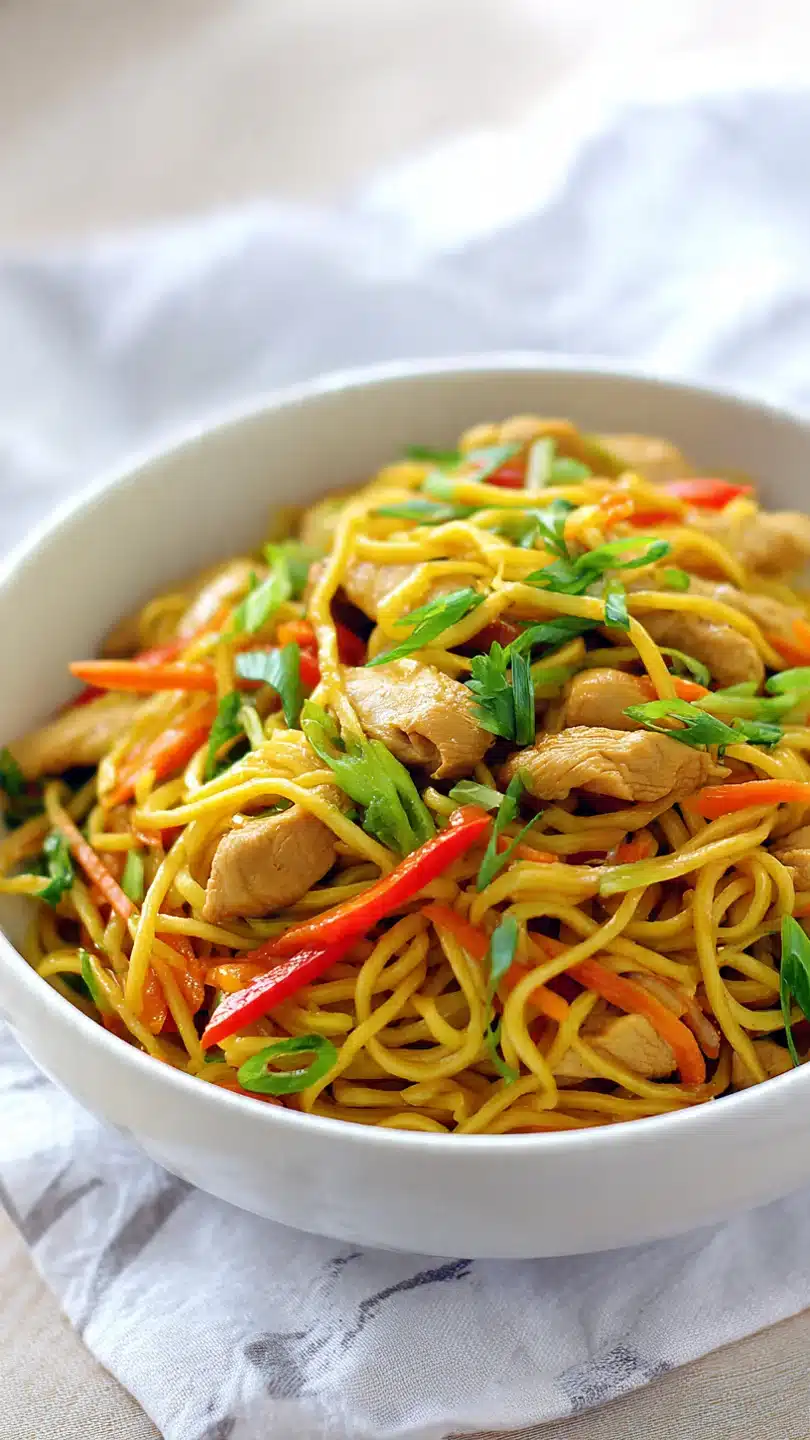
Easy Chicken Lo Mein
Ingredients
Equipment
Method
- In a medium bowl, combine the thinly sliced chicken with 2 tablespoons soy sauce, Shaoxing wine, and cornstarch. Toss well to coat every piece and let it marinate for at least 10 minutes while you prep the other ingredients. This step is non-negotiable for tender chicken—the cornstarch creates a protective coating that seals in juices during the high-heat stir-fry.
- Cook the noodles according to package directions until al dente. Drain and rinse briefly under cool water to stop the cooking and prevent sticking. Toss with a tiny drizzle of oil if needed. Trust me, slightly undercooked noodles are perfect here, as they’ll finish cooking in the sauce later and won’t turn mushy.
- Heat 1 tablespoon of vegetable oil in a large wok or skillet over high heat. Add the marinated chicken in a single layer and cook without moving for 2-3 minutes to get a good sear. Then stir-fry for another 2-3 minutes until cooked through. Remove the chicken to a clean plate.
- Add the remaining 2 tablespoons of oil to the same pan. Add the garlic and ginger and stir-fry for just 30 seconds until fragrant—don’t let them burn! Tip from me: Have your veggies prepped and ready to go before this step. Add the carrots, bell peppers, and cabbage. Stir-fry for 3-4 minutes until they are crisp-tender and vibrant in color.
- Return the cooked chicken and noodles to the pan with the vegetables. In a small bowl, whisk together all the sauce ingredients: 3 tablespoons soy sauce, oyster sauce, hoisin sauce, sesame oil, and chicken broth. Pour the sauce over everything in the pan. Using tongs, toss and stir everything together for 2-3 minutes until the sauce thickens slightly and coats every strand of noodle beautifully.
- Remove from heat and garnish with sliced green onions. Serve immediately in bowls. Step back and admire your creation—the glossy sauce, the colorful veggies, and the tender chicken all clinging to those perfect noodles. This is the fun part where your kitchen smells incredible and dinner is ready in minutes.


