

Chicken alfredo
There’s something deeply comforting about a bowl of perfectly creamy Chicken Alfredo. It’s the dish you crave after a long day, the one you serve to impress without stress, and the ultimate test of a simple sauce done right. As a chef, I’ve made countless versions, but this recipe is the one I return to time and again.
It balances rich, velvety texture with bright, savory flavor, and it comes together faster than you can get takeout. Forget the jarred stuff—this is how to make a Chicken Alfredo that feels like a hug in a bowl.
- Restaurant-Quality at Home: This recipe demystifies the creamy, luxurious sauce you love from Italian restaurants, using techniques that guarantee success every time.
- 30-Minute Marvel: From stovetop to table in about half an hour, this is a practical solution for busy weeknights that doesn’t sacrifice an ounce of flavor.
- Creamy, Not Gluey: Learn the simple secret to a sauce that clings to every strand of pasta without becoming thick or pasty. The texture is pure silk.
- Flavor-Building Technique: By cooking the chicken and sauce in the same pan, you create layers of savory depth that pre-cooked chicken or separate preparations simply can’t match.
- Endlessly Customizable: This is a fantastic base recipe. I’ll show you how to easily adapt it with different proteins, vegetables, and flavor twists to keep it exciting.
- Crowd-Pleasing Comfort: It’s a universal favorite that appeals to both kids and adults, making it a perfect centerpiece for family dinners or casual entertaining.
Ingredients You’ll Need
Let’s gather our ingredients—this is where simple, quality components transform into something magical. You likely have most of these in your kitchen already. The key here is choosing well: a block of real Parmigiano-Reggiano for grating, fresh garlic, and good heavy cream will make all the difference in your sauce’s flavor and texture.
- Chicken Breasts: I prefer breasts for their lean, tender bite, but thighs work wonderfully for even more juiciness. Pound them to an even thickness for uniform cooking.
- Kosher Salt & Black Pepper: These are your foundational seasonings. I specify kosher salt because its larger crystals distribute more evenly than table salt.
- Olive Oil & Butter: We use both! The oil has a higher smoke point for searing the chicken, and the butter adds irreplaceable richness to the sauce base.
- Fresh Garlic: Please, for the love of good food, use fresh cloves. Jarred minced garlic can bring a harsh, acidic note that will throw off your delicate sauce.
- Heavy Cream: This is non-negotiable for the classic, luxurious texture. Half-and-half or milk will not thicken properly and can curdle when the cheese is added.
- Parmesan Cheese: This is the star. Buy a wedge and grate it yourself. Pre-grated cheese contains cellulose to prevent clumping, which will leave your sauce grainy and less creamy.
- Fresh Nutmeg: A tiny pinch might seem old-fashioned, but it’s a chef’s secret for enhancing the savory notes of the cheese and cream without tasting like dessert.
- Fettuccine: The wide, flat noodles are ideal for holding the creamy sauce. Dried pasta works perfectly; just be sure to salt your boiling water like the sea.
- Fresh Parsley: This isn’t just a pretty green sprinkle. The fresh, slightly peppery flavor cuts through the richness and brightens the entire dish.
Kitchen Equipment Needed
You don’t need any special gadgets for this recipe, just solid basics. A large skillet or Dutch oven is essential—you’ll use it for both the chicken and the sauce, and it needs to be big enough to eventually toss the pasta. A large pot for boiling your pasta is a must.
I highly recommend tongs for easily turning the chicken and later tossing the pasta with the sauce. A whisk is your best friend for creating a smooth, emulsified sauce when you add the cheese. Finally, a box grater or microplane for your Parmesan cheese.
The microplane will give you a finer, fluffier grate that melts into the sauce almost instantly.
How to Make Chicken Alfredo Recipe
Step 1: Sear the Chicken to Perfection
Start by giving your chicken a quick pat dry with paper towels—this is crucial for getting a beautiful golden sear instead of steam. Season it well on both sides. In your hot skillet with olive oil, listen for that satisfying sizzle when the chicken hits the pan.
Don’t move it! Let it develop a deep golden crust for 5-7 minutes before flipping. This creates the fond—those delicious browned bits stuck to the pan—that will become the flavor base for your sauce.
Trust me, letting it rest after cooking is non-negotiable; it keeps the chicken juicy.
Step 2: Cook the Pasta and Save the Water
While the chicken rests, get your pasta water boiling. Salt it generously; it should taste like mild seawater. This is your only chance to season the pasta itself.
Cook the fettuccine until it’s al dente—it should have a slight bite to it. Believe me, it will continue to cook slightly in the hot sauce. Before you drain it, carefully scoop out about a cup of the starchy, salty cooking water.
This liquid is magic for adjusting your sauce’s consistency without making it watery.
Step 3: Build the Flavor Base
In the same skillet you used for the chicken (with all those tasty browned bits still in there), melt your butter over medium heat. Add the minced garlic. You’ll smell its aroma bloom in about 30 seconds.
The moment it becomes fragrant, move to the next step. Tip from me: if the garlic starts to color, your heat is too high. We want it sweet and aromatic, not bitter and burnt.
Step 4: Create the Luxurious Cream Base
Pour in the heavy cream, add the remaining seasonings and that pinch of nutmeg. Bring it to a gentle simmer—you’ll see small bubbles forming around the edges. Let it bubble quietly for 3-4 minutes.
This short reduction time concentrates the flavor and thickens the cream just enough so it can properly embrace the cheese. You’re looking for a texture that lightly coats the back of a spoon.
Step 5: Emulsify the Cheese into the Sauce
This is the most critical technique. Reduce the heat to low. If the sauce is too hot, the cheese can “break,” separating into oily clumps.
Gradually whisk in your freshly grated Parmesan, a handful at a time, waiting for each addition to melt smoothly before adding the next. If the sauce becomes too thick, now is the time to use your reserved pasta water, a tablespoon or two at a time, to loosen it to a silky, flowing consistency.
Step 6: Bring It All Together and Serve
Slice your rested chicken. Add the drained pasta and chicken pieces directly into the skillet with your gorgeous, creamy sauce. Using tongs, toss and fold everything together until every strand of pasta is gloriously coated.
Step back and admire your work. Finish with a shower of fresh parsley and extra Parmesan. Serve immediately while it’s hot, creamy, and absolutely irresistible.
- The Cheese Rule: Always add cheese to a warm, not boiling, sauce. The proteins in cheese can seize and become stringy or grainy when shocked with high heat. Low and slow incorporation is the key to velvety smoothness.
- Pasta Water is Liquid Gold: Never, ever dump all your pasta water. The starch in the water acts as an emulsifier, helping the fat from the cream and cheese bind with the liquid to create a stable, cohesive sauce that clings to the pasta.
- Avoid Overcooking the Garlic: Garlic burns in a flash and turns bitter. Cook it just until you can smell its aroma wafting from the pan—this usually takes less than a minute. Burnt garlic will ruin the delicate flavor of your entire sauce.
- Rest Your Protein: Slicing into chicken immediately after cooking releases all its precious juices onto the cutting board, leaving it dry. Letting it rest for 5-10 minutes allows the fibers to relax and reabsorb those juices.
- Grate Your Own Cheese: I can’t stress this enough. Pre-grated Parmesan contains anti-caking agents like cellulose or potato starch. These prevent the cheese from melting smoothly, leading to a slightly gritty or clumpy sauce.
Recipe Variations & Customizations
- Mushroom Alfredo: Before making the sauce, sauté 8 ounces of sliced cremini mushrooms in the butter until golden. Remove, then proceed with the garlic and cream, adding the mushrooms back with the pasta.
- Sun-Dried Tomato & Spinach: Stir in 1/2 cup of chopped oil-packed sun-dried tomatoes and 2 large handfuls of fresh baby spinach when you toss the pasta with the sauce. The heat will wilt the spinach perfectly.
- Cajun Chicken Alfredo: Season your chicken with 1-2 tablespoons of Cajun seasoning blend before searing. Add a splash of chicken broth to the cream sauce to balance the spice.
- Gluten-Free Version: Use your favorite gluten-free fettuccine. Be extra careful not to overcook it, as GF pasta can become mushy faster. The sauce itself is naturally gluten-free.
- Lighter Alfredo Sauce: For a slightly lighter version, substitute half the heavy cream with whole milk. You must be even more vigilant with heat control to prevent curdling, and the sauce will be a bit thinner.
- Seafood Alfredo: Replace the chicken with 1 pound of large shrimp or scallops. Sear them quickly in the pan for 1-2 minutes per side, remove, and add back at the end. Their delicate flavor pairs beautifully with the cream.
- Vegetarian Alfredo: Simply omit the chicken. For added heartiness, roast broccoli florets or asparagus spears and toss them in with the pasta.
What to Serve With This Recipe
Chicken Alfredo is rich and satisfying, so the best pairings are dishes that offer a contrast in texture and flavor. A simple green salad with a sharp, lemony vinaigrette is my go-to; the acidity cuts through the creaminess beautifully. For a vegetable side, garlic sautéed green beans, roasted broccoli with lemon zest, or a crisp Caesar salad are all excellent choices.
In terms of beverages, a crisp white wine like Pinot Grigio or Sauvignon Blanc complements the dish without overpowering it. For a non-alcoholic option, sparkling water with lemon or an iced herbal tea works wonderfully. This dish is perfect for a cozy family dinner, a casual date night at home, or when you need a guaranteed crowd-pleaser for potlucks.
Storage & Make-Ahead Instructions
- Refrigeration: Store leftovers in an airtight container in the refrigerator for up to 3 days. The sauce will thicken significantly as it chills.
- Reheating Method: The best way to reheat is on the stovetop over low heat. Add a splash of milk, cream, or broth and stir gently until warmed through. Microwaving can cause the sauce to separate and become oily.
- Freezing Not Recommended: Cream-based sauces like Alfredo do not freeze well. They tend to separate and become grainy when thawed and reheated.
- Make-Ahead Strategy: You can prep components ahead of time. Cook and slice the chicken, and grate the cheese 1-2 days in advance. The sauce, however, is best made fresh just before serving.
- Pasta Storage Tip: If you think you’ll have leftovers, store the pasta and sauce separately. Toss only the portion you plan to eat immediately. This keeps the pasta from absorbing all the sauce and becoming mushy.
Frequently Asked Questions
Q: Can I use milk instead of heavy cream?
A: I don’t recommend it for the classic texture. Heavy cream has a high fat content (36-40%) that allows it to simmer and reduce without curdling when the acidic cheese is added. Milk is much more likely to break and result in a thin, grainy sauce.
Q: Why did my sauce turn out grainy?
A: Graininess usually has two causes: using pre-grated cheese (which contains anti-caking agents) or adding the cheese to a sauce that is too hot. Always grate your own cheese and add it off the heat or over very low heat.
Q: How can I thin out a sauce that became too thick?
A: This is exactly what your reserved pasta water is for! Add it back, a tablespoon at a time, while tossing the pasta until the sauce reaches a silky, flowing consistency. It works better than plain water or milk.
Q: Can I make this sauce ahead of time?
A: Alfredo sauce is best served immediately. If you must make it ahead, prepare it without the cheese. Cool it, then refrigerate for up to a day.
When ready to serve, gently reheat the cream base, then whisk in the cheese over low heat.
Q: What’s the best pasta to use?
A: Fettuccine is traditional because its wide, flat surface area holds the creamy sauce beautifully. Linguine, tagliatelle, or pappardelle are also excellent choices. Avoid small shapes like penne or farfalle for this particular recipe.
Q: My sauce separated and looks oily. Can I fix it?
A: Sometimes this happens if the heat was too high. Remove it from the heat immediately. Add an ice cube and whisk vigorously—the rapid cooling can sometimes bring it back together.
Alternatively, adding a bit more cold cream and whisking can help re-emulsify it.
Q: Is there a way to make this lighter?
A: For a lighter version, you can use half heavy cream and half whole milk, and increase the Parmesan slightly for flavor. You can also use a lighter protein like shrimp or just load it up with vegetables like zucchini noodles (zoodles) for a portion.
Final Thoughts
This Chicken Alfredo recipe is more than just a list of ingredients and steps—it’s a lesson in building flavor and mastering a simple, timeless technique. The result is a dish that feels indulgent and special, yet is completely achievable on any busy weeknight. The creamy, garlicky sauce clinging to tender pasta and juicy chicken is a combination that never fails to satisfy.
I’ve shared all my professional tips and tricks to ensure your success, from grating your own cheese to using that magical pasta water.
Now it’s your turn. Gather your ingredients, trust the process, and treat yourself to a homemade Italian classic that’s far superior to anything from a jar or a restaurant takeout box. I promise, the effort is minimal, and the reward is a truly delicious, comforting meal.
Once you try it, I’d love to hear how it turned out! Share your creations online and tag me. And if you’re looking for your next pasta adventure, check out my recipe for a vibrant homemade pesto or a hearty weeknight bolognese.
Happy cooking
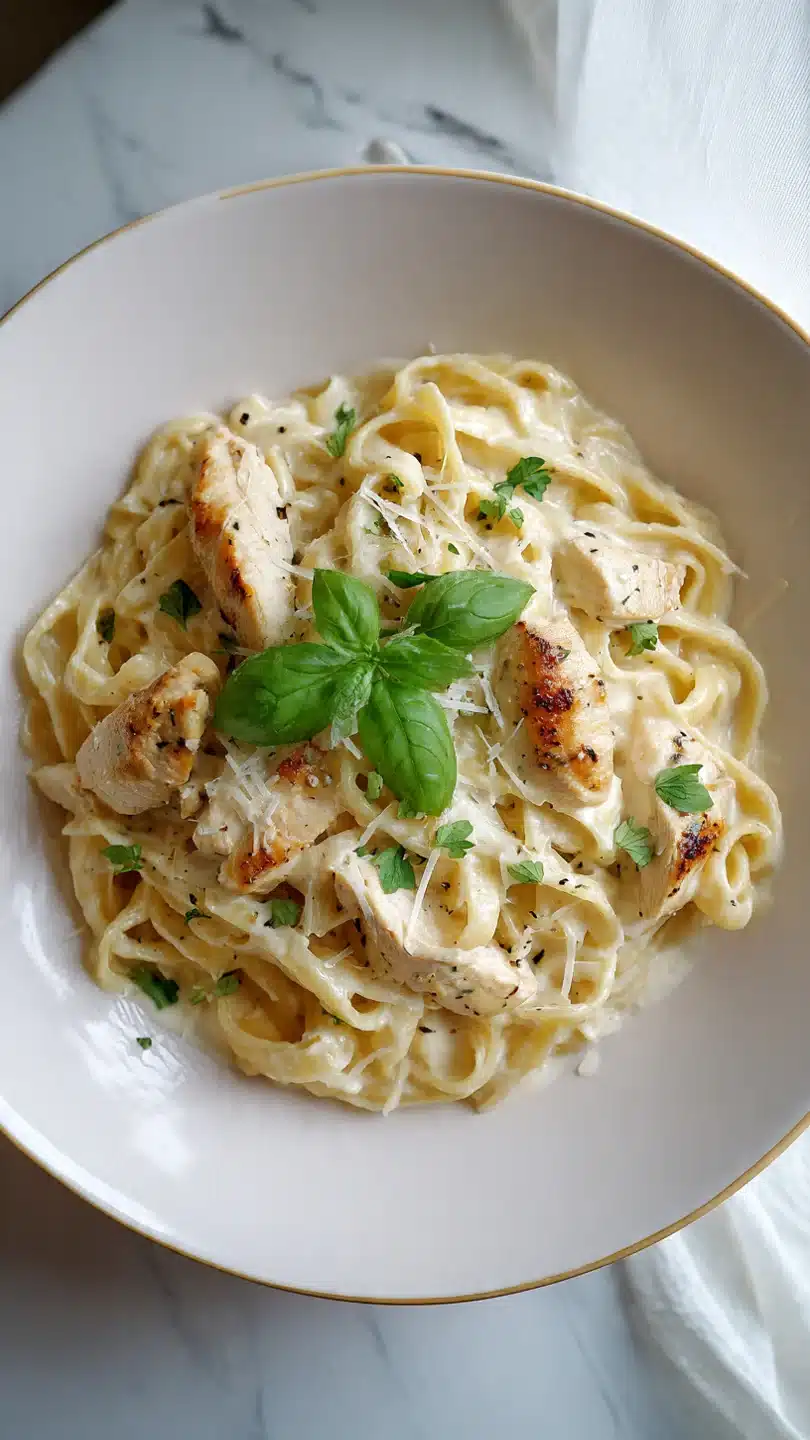
Classic Chicken Alfredo
Ingredients
Equipment
Method
- Season the chicken breasts on both sides with 1/2 teaspoon of the kosher salt and 1/4 teaspoon of the black pepper. Heat the olive oil in a large skillet or Dutch oven over medium-high heat. Once the oil shimmers, add the chicken. Cook for 5-7 minutes per side, or until golden brown and cooked through (internal temperature of 165°F). Transfer to a cutting board, tent with foil, and let rest.
- While the chicken rests, bring a large pot of generously salted water to a boil. Add the fettuccine and cook according to package directions until al dente. Reserve 1 cup of the starchy pasta water before draining. This water is liquid gold for your sauce.
- In the same skillet used for the chicken (don’t wash it—those browned bits are flavor!), melt the butter over medium heat. Add the minced garlic and cook for just 30-60 seconds until fragrant. You want to wake up the garlic’s aroma without letting it brown, which can make it bitter.
- Pour in the heavy cream, the remaining salt and pepper, and the nutmeg. Bring the mixture to a gentle simmer, stirring occasionally. Let it simmer for 3-4 minutes to reduce slightly and thicken. You’ll know it’s ready when it coats the back of a spoon.
- Reduce the heat to low. Gradually whisk in the grated Parmesan cheese, a handful at a time, until it’s fully melted and the sauce is smooth. If the sauce seems too thick, add a splash of the reserved pasta water, a tablespoon at a time, until it reaches your desired consistency.
- Slice the rested chicken into strips or bite-sized pieces. Add the drained pasta and chicken to the skillet with the sauce. Using tongs, toss everything together until the pasta is beautifully coated. Garnish with fresh parsley and extra Parmesan. Serve immediately.


